
3 Common Reasons Why Your Fungicide Isn't Working (And How To Fix It)
How Hydroponic And Regular Gardening Tips Can Save You Time and Money
Table of ContentsHow and Why Hydroponics Fertilizers Will Change ForeverWhy Best Hydroponic Nutrients For Plants are so PopularMost Unusual Hydroponic And Regular Gardening Tips facts
 The Only Guide to Fertilizing Your Hydroponic Garden Properly You're Going To Need
After this, there is the possibility a source of natural nitrogen might be required. The most significant drawback of using natural nutrients in hydroponics, is that it can be hard to reach. What takes place is that the systems rely on microorganisms which are found in the root zone to transform organic substances into nitrogen sources which are ideal for plants to utilize.
https://www.youtube.com/embed/kUlxbByK3yQ
Although there are numerous industrial products offered which are organic based, the most (worm farming). It ought to be kept in mind, plants are none the smarter where their nutrients came from, and if you utilize inorganic, or natural, they have no choice. Should of the argument about being natural is for the benefit of what we do to acquire the healthiest food possible.
This is a highly effective method of that are healthy for use in a hydroponic system. Materials such as manure, blood and bone, seaweed meal, fish meal, and limestone can all be mineralized. The vermiculture procedure relies on two components. The vermicast procedure should be performed all the method to conclusion, and then from this, all of.
Although numerous food scraps, weeds, and plant life can be utilized, these wind up consisting of lower levels of the nutrient than liquids being produced from high-mineral sources such as the fish blood and bone meal. Another area which causes issues is that of concentration because. This can leave plants more susceptible to disease while not growing vigorously.
Here are 2 quick methods of producing organic nutrients for your hydroponic systems. In a 5-gallon pail, place 1 pound of either garden compost or work castings. Fill the container with water and stir well. Aerate the mixture continuously. Fish tank air pumps are ideal for this. Sit the container out of direct sunlight for 3 days.
Filter the liquid through a non reusable filter to eliminate all of the solids. This garden compost or worm tea can serve as your fertilizer. In a 5-gallon bucket add one gallon of water. Include 1 1/2 tsp of fish emulsionAdd 1 1/2 tsp of seaweed extractAdd 1 tablespoon of blood mealMix well and utilize as your fertilizer.
Why Hydroponic Plant Environments Guidelines are so Popular
Epsom salts are used to deal with magnesium deficiencies, and not only for hydroponics. They are typically utilized in soil based gardens also. Epsom salts include oxygen, sulfur, and magnesium (magnesium sulfate). Aside from the N-P-K ratios, you require a consistent temperature in between 50 -70 degrees for fall crops. Spring plants need 60 80 degrees.
Hydroponic nutrients will increase the strength of buds. Plants will likewise grow too fast. These should not be used in the soil as soil fertilizers should not be used in hydroponics. Oscar Stephens I am a gardening and tech lover! Stumbling throughout the world of Hydroponics, Aquaponics and Aeroponics by accident I have actually decided to develop TheHydroponicsPlanet to put all of the best information I can discover in one easy to navigate place.
Hydroponics single component fertilizers consist of whatever a plant needs for development and are normally well suited for green plants, such as salads and herbs. With hydroponic multi-component fertilizers, it is possible to respond more particularly to the numerous growth cycles of the plant and to provide the plant with an optimal supply, particularly in the blooming and fruiting phase.
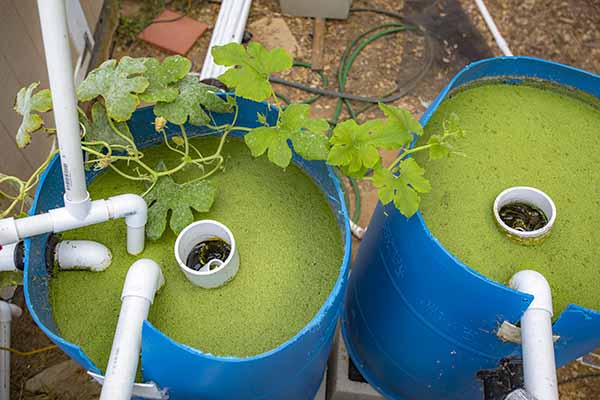 The best info on Is Regular Fertilizer For Hydroponics?
So-called ingredients "Increase" or PK 13-14 (phosphorus and potassium parts) can also be added, e. g. in order to further enhance the blooming and fruit development. = Single element complete fertilizer. It can be supplemented with PK 13-14 during the blooming phase.= Two-component fertilizer. Vega (A+B) is used in the development stage, Flora (A+B) in the flowering stage.= 3 component fertilizer.
Hydroponics is generally growing plants without soil. It is a more effective way to provide food and water to your plants. Plants don't use soil they use the food and water that are in the soil. Soil's function is to supply plants nutrients and to anchor the plants' roots. In a hydroponic garden, you offer your plants with a complete nutrient formula and an inert growing medium to anchor your plants' roots so they have much easier access to the food and water.
Plants grow faster and are ready for harvest earlier. You can grow more plants in the exact same space as you can with a soil garden, and because there's no soil, there's no concern about soil-borne illness or pests and no weeding. Picking a system is the initial step in an effective hydroponic gardening experience.
How How To Choose Hydroponic Fertilizer are Changing the World
 How The What Is The Best Fertilizer For Hydroponics Industry are Changing to Troubling Times
Likewise believe about what you wish to grow, whether you may want pesticide my site to broaden, and repeating costs. The most basic method to start is with a passive system. These utilize a wicking material to draw nutrients approximately the roots, or the root pointers are suspended in a stationary solution with the main portion of the rootball hanging in the air.
They are best suited for smaller plants. Active systems are best for bigger plants and gardens. An active system utilizes a pump and timer to stream nutrients around the plant's roots and to supply aeration. It costs more, but is more effective and needs less attention, given that the pump and timer manage whatever automatically.
active systems, you'll require to choose in between media-based and water culture systems. Media-based systems such as ebb-and circulation (flood-and-drain), top-feed (drip), or bottom-feed systems count on a growing medium to support the plants and hold nutrition solution around their roots. A lot of run on timers, at the same time wetting the medium to rinse salts and replenish nutrients and after that draining pipes so the plants can draw in climatic oxygen.
These systems require to be secured from power interruptions, which can leave vulnerable roots high and dry if the pump stops operating. On the other hand, these systems are very efficient, considering that nutrients are recycled back into the reservoir, and use of timers implies they require less attention from you.
)